Skip to content

Skip to content
  • Inquiry
    Units
  • Primary
    Sources
  • Multimedia
    Sources
  • Hands-on
    Activities
  • About
    • REACH Team
    • Pilot Programs
    • Supporters
  • Contact
  • News
Donate to IEEE REACH

IEEE Sites

  • IEEE.org
  • IEEE Xplore Digital Library
  • IEEE Standards
  • IEEE Spectrum
  • More Sites
  • IEEE.org
  • IEEE Xplore Digital Library
  • IEEE Standards
  • IEEE Spectrum
  • More Sites

IEEE Reach

IEEE

Donate
Skip to content
  • Inquiry
    Units
  • Primary
    Sources
  • Multimedia
    Sources
  • Hands-on
    Activities
  • About
  • Contact
  • News

Communication

Home > Topics > Communication > Page 2

Reset filters

Filter Results

Chinese Oracle Bone

Primary Source

Chinese Oracle Bone

Information Theory Inquiry Unit

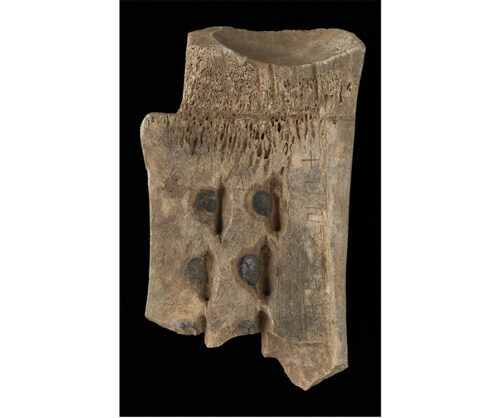
In ancient China, mainly during the late Shang dynasty, oracle bones were used as a form of divination. Inscriptions were carved on pieces of ox scapula and turtle plastron and are the oldes…

Learn more

Cave Paintings

Primary Source

Cave Paintings

Information Theory Inquiry Unit

A form of rock art found in caves typically of prehistoric origin and are representative of a means to convey information. The France Ministry of Culture (Ministere de la Culture) and the N…

Learn more
Samuel Morse, American Electro-Magnet Telegraph Patent and Morse Code

Primary Source

Samuel Morse, American Electro-Magnet Telegraph Patent and Morse Code

Information Theory Inquiry Unit

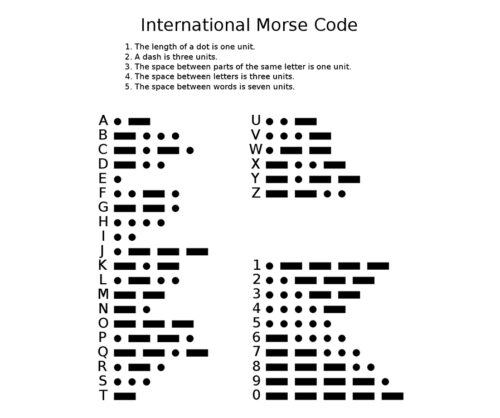
Samuel Finley Breese Morse, an accomplished painter and inventor, was convinced of the possibility of transmitting words using electricity and wires. In 1840 he patented "Improvement in the Mode o…

Learn more
Phoenician Alphabet

Primary Source

Phoenician Alphabet

Information Theory Inquiry Unit

Sometime around 2,800 years ago, the Phoenicians made a major invention—the vowel! That is, they realized that instead of each symbol representing a syllable (ba, be, bi, bo, bu, ca, ce, ci, co, cu,…

Learn more
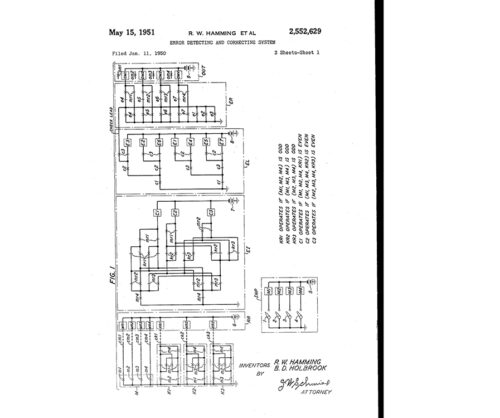
Error-Detecting and Correcting System (Patent)

Primary Source

Error-Detecting and Correcting System (Patent)

Information Theory Inquiry Unit

Richard W. Hamming, Morristown, and Bernard D. Holbrook, Madison, N.J., assignors to Bell Telephone Laboratories, Incorporated, New York, N.Y., a corporation of New York Application January 11, 19…

Learn more
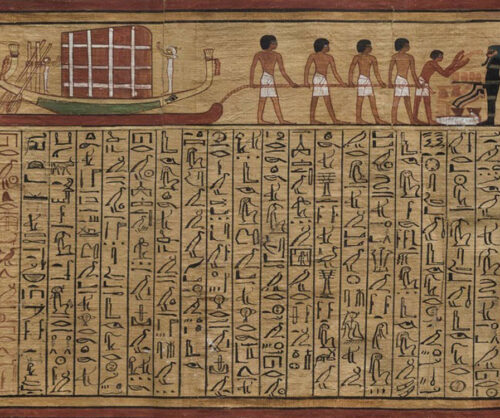
Hieroglyphs and Ancient Egyptian Writing

Primary Source

Hieroglyphs and Ancient Egyptian Writing

Information Theory Inquiry Unit

Hieroglyphics are an original form of writing out of which all other forms have evolved. Museo Egizio, Papyrus Collection, Turin Papyrus Online Database, Book of the Dead, A 14-meter-long papyr…

Learn more
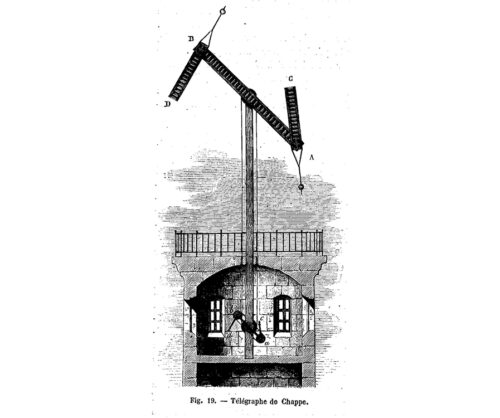
Semaphore Telegraph

Primary Source

Semaphore Telegraph

Information Theory Inquiry Unit

An optical telegraph with a line of stations, typically towers, that was used to convey textual information by means of visual signals. It was comprised of pole on top of a tower, and a pivoting cross…

Learn more
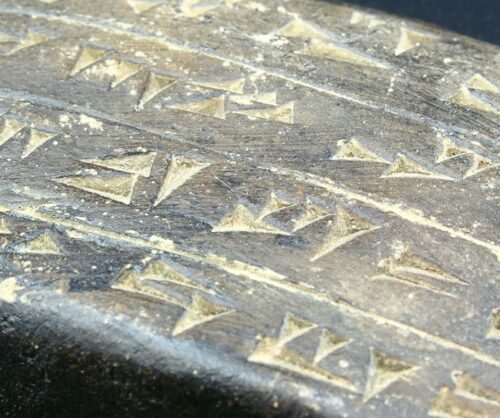
Cuneiform Hands-On Activity

Hands-on Activity

Cuneiform Hands-On Activity

Information Theory Inquiry Unit

Information Theory Unit Cuneiform was one of the first writing systems, developed 5,000 years ago in Mesopotamia to record information on clay tablets. By asking students to record current …

Learn more
Make a Hand Drum

Hands-on Activity

Make a Hand Drum

Electronic Music Inquiry Unit

This hands-on activity shows how to make a hand drum that creates percussion sounds. Materials Mini Glue Gun and Glue Stick Hole Punch Drawing Compass Thread or Yarn (Waxed thread wor…

Learn more
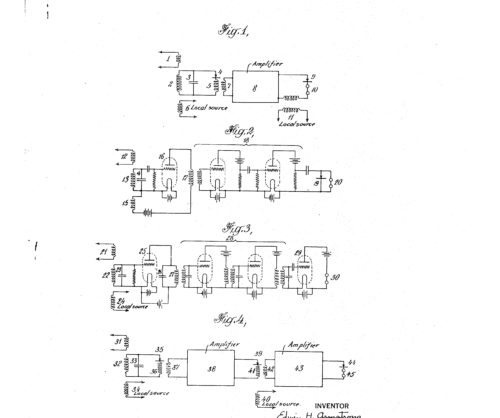
Edwin H. Armstrong, of Paris, France Method of Receiving High-Frequency Oscillations Patent # 1,342,885 Application filed Feb. 8, 1919 – Patented June 8, 1920

Primary Source

Edwin H. Armstrong, of Paris, France Method of Receiving High-Frequency Oscillations Patent # 1,342,885 Application filed Feb. 8, 1919 – Patented June 8, 1920

Radio Inquiry Unit

Radio Inquiry Unit While serving in the U.S. Army during World War I, Armstrong synthesized three ideas to create his superheterodyne circuit for selectively amplifying a very high fr…

Learn more

Posts navigation

Previous page 1 2 3 … 7 Next page

Help Support IEEE REACH

Donate today!

IEEE REACH provides teachers and students with educational resources that explore the relationship between technology and engineering history and the complex relationships they have with society, politics, economics, and culture. REACH was created by the IEEE History Center, a unit of IEEE whose mission is to preserve, research, and promote the history of information and electrical technologies.

CONTACT
reach@ieee.org

SIGN UP FOR OUR NEWSLETTER

Explore IEEE REACH

  • Agriculture
  • Manufacturing
  • Materials & Structures
  • Energy
  • Communication
  • Transportation
  • Information Processing
  • Medicine & Healthcare
  • Warfare
  • Explore REACH Inquiry Units
IEEE REACH
  • Home
  • About
  • IEEE REACH Terms & Conditions
  • Contact
  • Supporters
  • IEEE Foundation
  • IEEE History Center
  • Engineering & Technology History Wiki
  • Download the REACH Overview
Legal
  • Copyright Policy
  • Nondiscrimination Policy
  • Privacy & Opting Out of Cookies
  • Accessibility
  • IEEE Ethics Reporting

A not-for-profit organization, IEEE is the world's largest technical professional organization dedicated to advancing technology for the benefit of humanity.

© Copyright 2025 IEEE – All rights reserved. Use of this website signifies your agreement to the IEEE Terms and Conditions.

IEEE